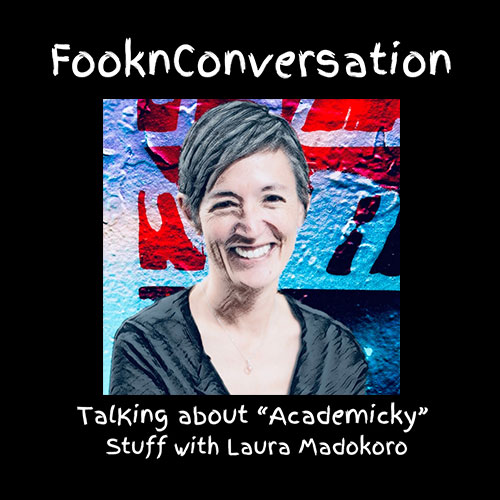
In Episode 68 Dr. Nicholas Ng-A-Fook hosts Dr. Laura Madokoro, a mixed-generation settler historian from Quebec’s Eastern Townships and a leading scholar of migration, refuge, and humanitarianism. Now an Associate Professor at Carleton University, she draws on the intersecting confluences of an archivist, journalist, and historian to illustrate how stories surface held, and circulated within and by “humanitarian” settler colonial nation-states. Her first book, Elusive Refuge, reshaped understandings of the racialized politics of refugee admission, while her new book, Sanctuary in Pieces, examines two centuries of sanctuary, (re)fugitivity, and urban displacement. She also leads The Disaster Lab and Sites of Sanctuary, advancing work on diasporic disaster citizenship. Our conversation traced her early pathways through museums, archives, and journalism, and how these experiences cultivated a deep curiosity about whose stories get recorded, whose are silenced, and how one sentence can redirect an entire research trajectory. We discussed her long-standing interest in humanitarianism and the tensions between state rhetoric and the everyday labour of different historical and contemporary actors in a democratic commonwealth society. Dr. Madokoro reflected on the ethics of working with archives, the risks and responsibilities of making stories public, and the importance of respecting silence and refusal. She shares about the evolving practice of sanctuary, the challenges of visibility in volatile political climates, and how the body itself can serve as archive in understanding displacement. Throughout our conversation, she emphasized transparency, care, and humility in relation to the discipline of history. We closed our conversation by reflecting on writing during the pandemic and the importance of holding space for complexity, community agency, and our ethical responsibilities in relation to doing history as a beautiful, beautiful craft.